Whether, however, the feeding frequency of Mediterranean snakes does increase under a climate change (= warming) scenario, has not been directly tested by field investigations, although being obviously a major issue of ecological investigations.
However, there seems to be little to no literature available on meal size affecting the degree of postprandial thermophily in snakes. We were interested in determining if meal size influenced post-feeding thermoregulation.
Whether, however, the feeding frequency of Mediterranean snakes does increase under a climate change (= warming) scenario, has not been directly tested by eld investigations, although being obviously a major issue of ecological investigations.
However, this assumption may sometimes be unfounded. In this study, captive gravid T. sirtalis showed reduced feeding behavior, similar to free-ranging gravid snakes from the same population but showed very different thermoregulatory behavior, choosing low temperatures instead of high.

Keywords: Thickhead ground snake, thermal biology, thermoregulation, seasonal variation, tropical mountains.We also contrasted the accuracy and effectiveness of snake thermoregulation and habitat thermal quality during wet and dry seasons.
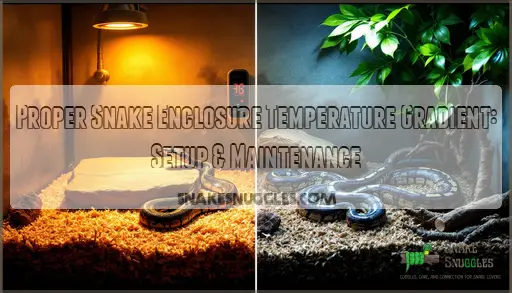
Key Aspects of Snake Behavior. Thermoregulation. Snakes are ectothermic, often referred to as cold-blooded, meaning they rely on external sources of heat to regulate their body temperature.
Habitat scaling prevents stress, injury, and thermoregulation failures. Proper research techniques, including clear science writing, are essential for understanding species-specific habitat requirements. Ventilation and Secure Latching Mechanisms.

This particular example perfectly highlights why Snake Thermoregulation And Feeding Frequency is so captivating.
Snake locations and body temperatures were monitored before and after feeding in midautumn. Body temperatures of snakes that had eaten were compared with the body temperatures of unfed controls and with environmental temperatures.
The thermoregulatory behaviour of snakes following feeding provides an ideal opportunity to study thermal ecology. Snakes typically ingest large meals at infrequent intervals and several factors should make hastened digestion through increased thermoregulation advanta-geous.