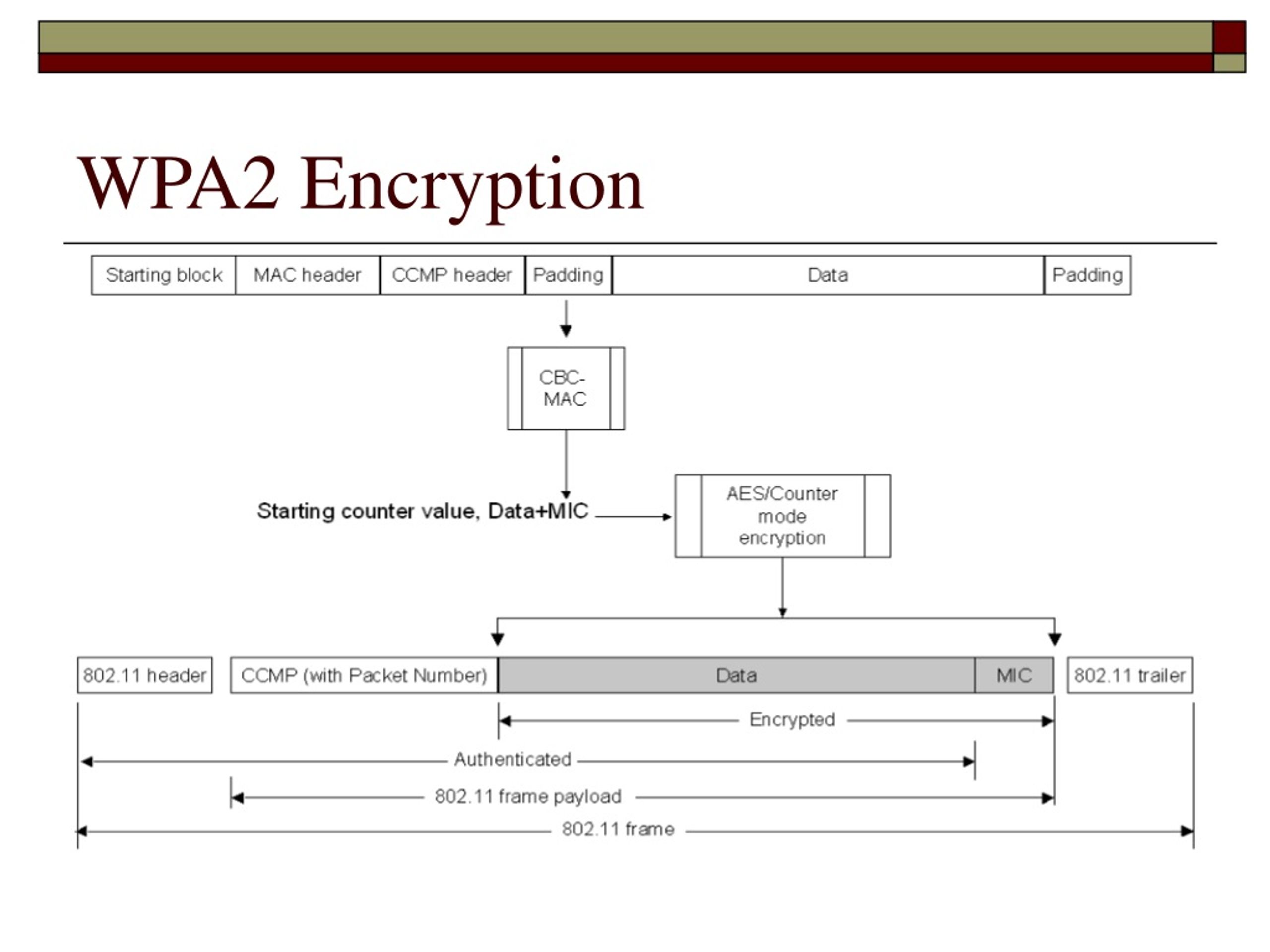
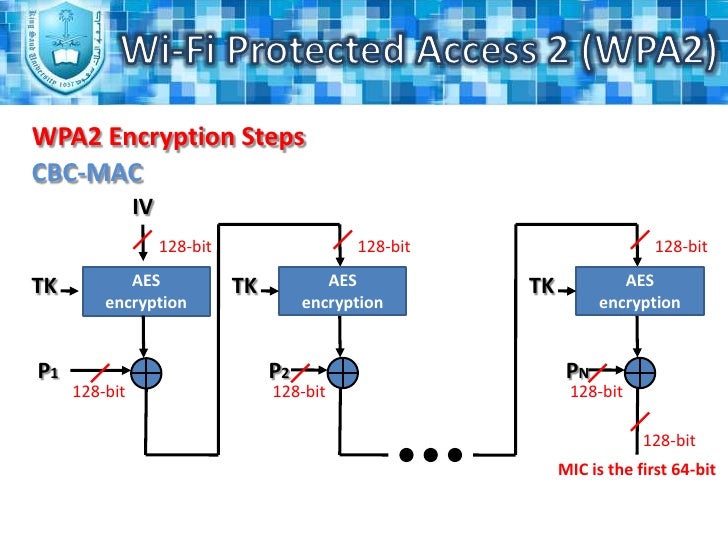
The WPA protocol implements the Temporal Key Integrity Protocol (TKIP). WEP uses a 64-bit or 128-bit encryption key that must be manually entered on wireless access points and devices and does not change.
Hybrid encryption (WPA2 + WPA3) offers the best balance of security and compatibility for most networks. It allows both newer WPA3-capable devices and older WPA2-only devices to connect. If you have legacy devices that struggle to connect, use Standard encryption (WPA2).
WPA2 vs. WEP, WPA, and WPA3. When you read about Wi-Fi security, the primary focus is usually on the type of encryption used to secure the wireless connection.

Fortunately, setting up a secure WPA2 password is easy. To get started, youll need to: Log in to your WiFi routers configuration page: Youll typically find this at the address 192.168.1.1 or router/login. Once logged in, you should find an option to change the security settings.
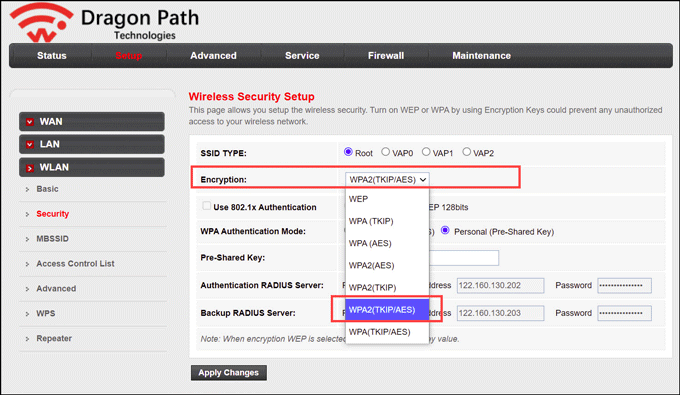
The two main WPA2 encryption methods have several important differences beyond just using different key lengths. Lets look at each in turnWPA2-Personal supports multiple encryption types. WPA and WPA2 are backwards-compatible with WEP, which only supports TKIP.

Discover step-by-step guidance for locating your WEP, WPA, or WPA2 key to access your Wi-Fi network securely, and learn to manage wireless encryption settings.
Join this channel to get access to perks:https://www.youtube.com/channel/UCYuizWN2ac4L7CZ-WWHZQKw/join#hacking #hacker #cybersecurity How To Capture And Crac...

WPA3 (Wi-Fi Protected Access 3). An open network is pretty much as the name implies open. It has no password and practically anyone can connect to it. WEP is an old protocol, rarely in use and requires a password like its successors.
The Channel Width setting is preset to Auto, allowing the clients channel width to adjust automatically. Security. We recommend you choose WPA2-PSK[AES] or WPA3-Personal+WPA2-PSK[AES]. If you select other options, configure the related parameters as described on the help page.